Victoria Amani
Facts over fear — plain-language women's health guides
What I Wish Every Woman Knew The Day She Heard The Word "Fibroid"

If you were just told you have fibroids — and your mind hasn't stopped racing since — read this before you do anything else.
Maybe you went in because your periods had gotten heavier than usual. Maybe you were exhausted all the time, or your lower belly felt swollen, or you'd been trying to get pregnant without success.
Then came the ultrasound. Then came the word.
Fibroid.
And in the space of a few seconds, your mind probably went somewhere dark.
Will I ever have children? Will I need surgery? Is this cancer? Did I do something wrong?
Then the advice started coming from everywhere at once. Your auntie has a herbal mixture. A neighbour knows someone who got "completely healed." Someone in church says fasting will fix it. Social media says something different every time you open it — one video says fibroids disappear on their own, another says you'll never carry a child, another is selling a tea that "melts" them in two weeks.
Before long, you don't know who to believe. You just know you're scared.
Here's what almost nobody tells you at that point: the fibroids aren't usually the biggest problem. The fear is. The fear that fills every silence with worst-case scenarios. The fear that turns every conversation into a fibroid conversation. The fear that makes you compare your body to a stranger's story on Facebook.
That fear is exhausting. It follows you into your relationship, into your plans for the future, into how you see yourself.
And most of it is built on things that simply aren't true.
I've heard variations of this same fear from more women than I can count. It's what led me to put this guide together.
A Little About Why I Wrote This

My name is Victoria Amani. I'm not a doctor, and I'm not going to pretend to be one on this page. What I am is someone who got frustrated watching women I care about spiral into fear over a diagnosis that, in most cases, did not deserve that level of panic.
I spent a long time going through the actual research on fibroids — not the WhatsApp forwards, not the Instagram cure-alls — the real clinical information doctors and researchers actually work from. I combined that with what I kept hearing, over and over, from women going through the exact same fear: the same unanswered questions, the same misinformation, the same silence around symptoms nobody wants to say out loud.
The Silent Fibroid Fear is what came out of that. It's not a miracle cure. It's not a substitute for your doctor. It's the guide I wish every woman got handed the same day she got her diagnosis — before the fear had time to take over.
A couple of short stories below are shared from conversations I've had with women along the way. Names and identifying details have been changed.
One woman I'll call Ngozi told me she sat in her car outside the clinic for forty minutes after her scan, too afraid to drive home and say the word out loud to her husband. Another, Aisha, said she skipped her own sister's baby shower that month — not because anything had actually changed for her, but because she couldn't sit through the conversation.
What struck me both times wasn't the diagnosis. It was how much of the fear was built on things a short, clear conversation could have cleared up. That gap — between what women are told and what they actually understand — is the whole reason this guide exists.
The FIBROID CLARITY™ Method
Everything in this guide is organised around one simple framework — a way to move from panic to a plan, one step at a time.
- CClarify — understand what's actually happening inside your body, in plain language.
- LLearn — recognise your own symptoms instead of comparing yourself to someone else's story.
- AAssess — understand how fibroids are diagnosed and how treatment decisions actually get made.
- RRespond — build daily habits that genuinely support your health alongside proper medical care.
- IImplement — walk into every appointment with a plan and the confidence to ask the right questions.
Here's the reframe at the centre of this whole guide: fear grows fastest in the space where information should be. The moment a woman understands what's actually happening in her body — what's common, what's rare, what genuinely needs urgent attention and what doesn't — the fear starts losing its grip. Not because the diagnosis changed. Because the unknown did.
Some Of What You've Probably Already Heard — And What's Actually True
Chapter 2 of the guide walks through the most common fibroid myths in detail. Here's a taste of what's inside:
"Fibroids mean you'll never have children." Not true for most women. Whether fibroids affect fertility depends on their size, number, and — most importantly — their location. Many women with fibroids conceive naturally and carry healthy pregnancies.
"Every fibroid has to be removed immediately." Also not true. Many fibroids are found by accident on a routine scan, in women who feel completely fine. In a lot of cases, the right approach is simply monitoring — not surgery.
"Fibroids always turn into cancer." This is one of the most panic-inducing myths, and one of the least accurate. The vast majority of fibroids are benign. They are not cancer, and having them does not mean they will become cancer.
The guide covers seven of these myths in full, along with a simple checklist for spotting misinformation before it scares you.
The Silent Fibroid Fear
Replace fear with facts — a plain-language guide to understanding your fibroid diagnosis
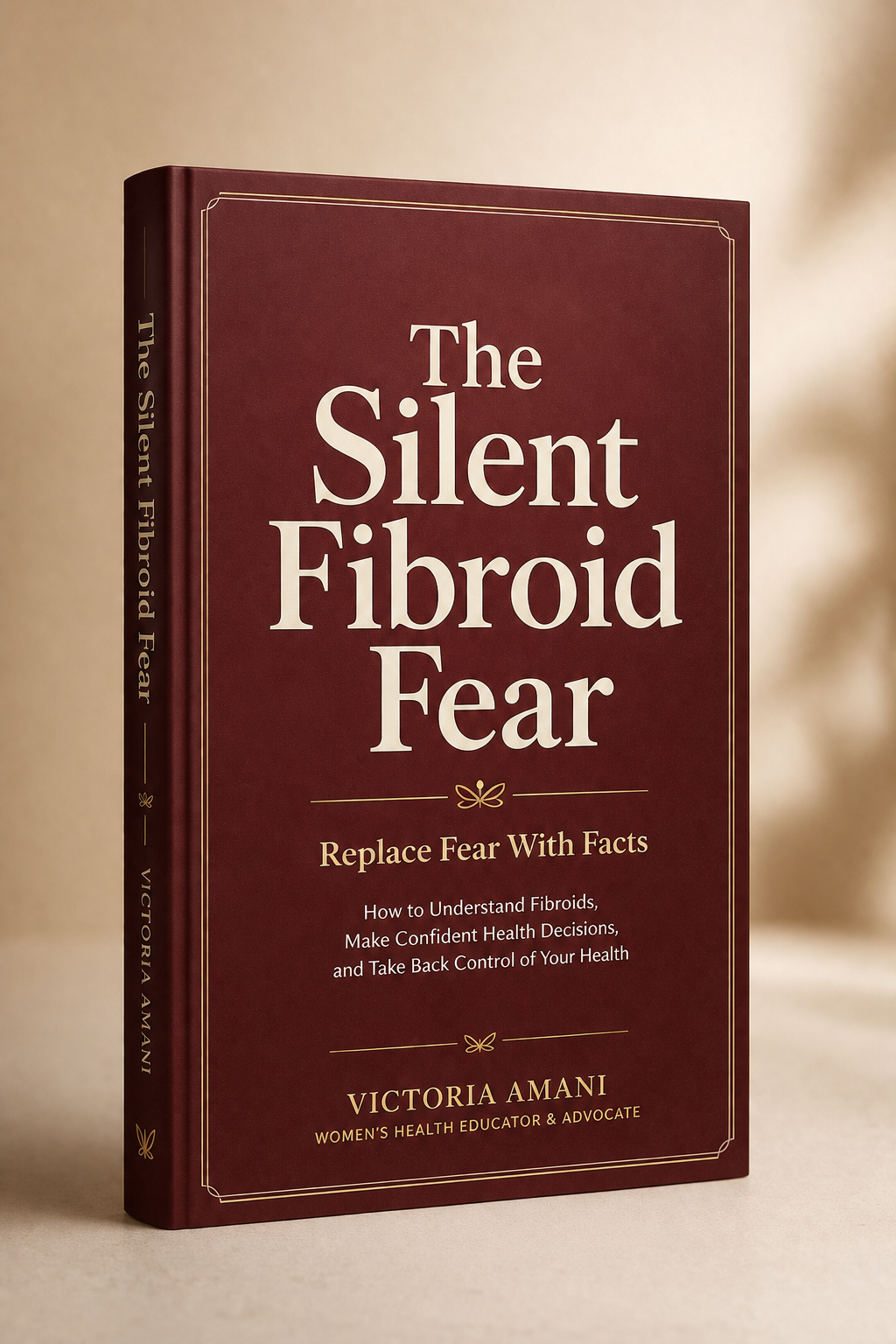
Everything is written the way I wish someone had explained it to me — no jargon, no scare tactics, no vague reassurances. Just what's actually known, laid out so you can read it in one sitting and walk away with real answers.
What's Inside
- CH 1 — The Day Everything Changed — naming the fear most women feel and never say out loud
- CH 2 — The Fibroid Lies We've Been Told — 7 common myths, corrected
- CH 3 — Clarify — what fibroids actually are, why they develop, and the different types
- CH 4 — Learn — how to read your own symptoms instead of guessing
- CH 5 — Assess — how diagnosis and treatment decisions really work
- CH 6 — Respond — daily habits that genuinely support your health
- CH 7 — Implement — building your own long-term plan and becoming your own advocate
- + — Your Next 30 Days Start Today — a 30-day action plan, symptom tracker, appointment planner, and question list to bring to your doctor
Plus a disclaimer, copyright page, and a short note about the author — because this is a real, complete guide, not a scrap of PDF.
Compare That To What Else Is Out There
Before this, your options were probably some combination of:
- ✗ Hours scrolling contradictory health forums and Facebook groups, more confused after than before.
- ✗ Herbal mixtures with no evidence behind them — and no idea what they're actually doing to your body.
- ✗ A rushed five-minute doctor's appointment with no time to ask the questions that actually matter to you.
- ✗ Advice from relatives who mean well but are repeating the same myths this guide corrects.
- ✗ Doom-scrolling WhatsApp voice notes at 1am, imagining the worst.
And the real cost — the one nobody puts a number on — is the sleep you've lost, the plans you've put on hold, and the fear that's been sitting in the back of your mind for weeks.
How Much Does This Cost?
A guide like this — researched properly, written to actually be understood, laid out as a real 7-chapter resource with a full action-plan section — could reasonably be priced at ₦9,000.
But the point of this guide is to get real information into as many hands as possible. So for now, it's priced at a fraction of that.
Once You Click The Button, Here's What Happens
- You're taken straight to a secure payment page.
- You complete your payment — card, bank transfer, or USSD.
- Your copy of the guide is delivered instantly to your email.
That's it. No waiting, no manual steps.
Included With Your Guide
A Friendly Fibroid Kitchen
A 10-page companion guide on eating in a way that genuinely supports your body — no miracle foods, no "cure" claims, just practical, realistic guidance you can actually use.
Everything You're Getting Today
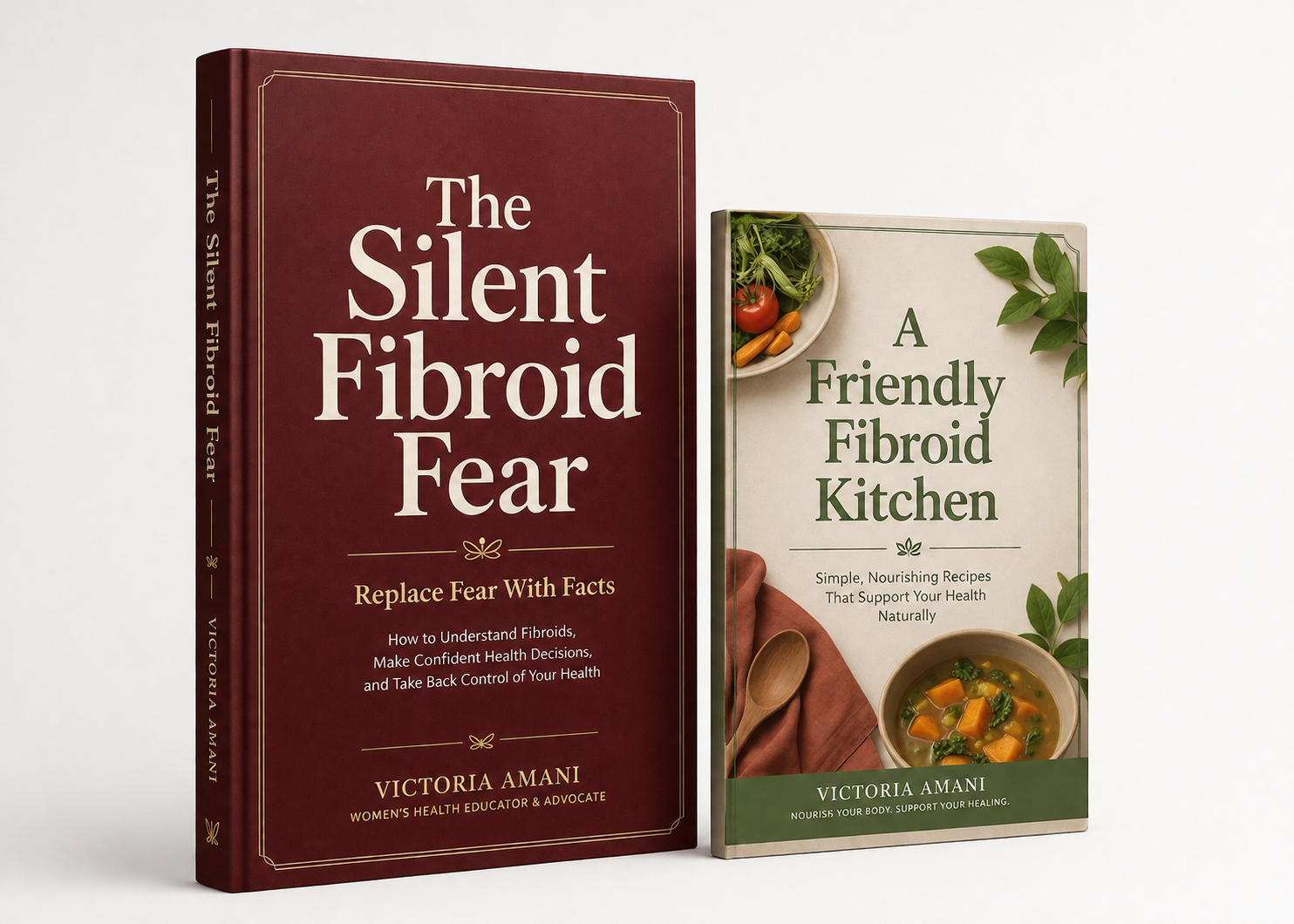
- ✓ The Silent Fibroid Fear (full guide) ₦9,000
- ✓ A Friendly Fibroid Kitchen (bonus) ₦2,000
Right Now, You Have Two Choices
- Keep piecing together advice from people who aren't doctors
- Keep comparing your case to stories that aren't yours
- Keep carrying questions you're too rushed to ask at your next appointment
- Keep guessing at what your symptoms actually mean
- Keep living with the fear instead of the facts
- Understand exactly what's happening in your body, in plain language
- Know which myths to ignore and which symptoms deserve attention
- Walk into your next appointment with real questions
- Build a simple daily plan that actually supports your health
- Trade fear for a plan you can follow
Our Guarantee
If you go through the guide and feel it genuinely didn't help you understand your diagnosis better, reach out within 7 days of purchase and we'll sort it out with you directly. This is meant to help — not to sit unread on your phone.
If you've read this far and you're still hesitating — I understand. ₦4,500 can feel like a lot when you're not sure what you're getting.
But think about what you've already spent trying to make sense of this on your own — the time, the worry, maybe even money on things that didn't actually help. This guide exists so you stop guessing.
You don't have to keep carrying this fear alone. Get the facts, and give yourself a plan.
With care for your peace of mind,
Victoria Amani
Comments (1)
If you've just been diagnosed and you're scrolling through this at midnight scared out of your mind — I made this for you. Drop a comment if you have a question, I read every one.
Like (0)Frequently Asked Questions
How is the guide delivered?
Instantly by email as a downloadable PDF, right after payment is confirmed.
Is this a replacement for seeing my doctor?
No. This guide is designed to help you understand your diagnosis and prepare for your medical appointments — not replace them. Always work with a qualified healthcare provider for diagnosis and treatment decisions.
I have severe symptoms — will this still help me?
Yes. The guide covers the full range of fibroid experiences, including when and why urgent medical attention matters. It's written to help you understand your situation, whatever it looks like.
What if my partner doesn't understand what I'm going through?
The guide is written in plain language, which makes it something you can genuinely share and talk through together if that's helpful for you.
Is the guarantee real?
Yes. If it didn't help you understand your diagnosis better, contact us within 7 days of purchase.
Why is this different from what I've already read online?
Most of what's online is either overly clinical or unverified miracle claims. This guide sits in between — written in plain language, but grounded in real health information, and organised so you can actually use it.
Leave a Comment